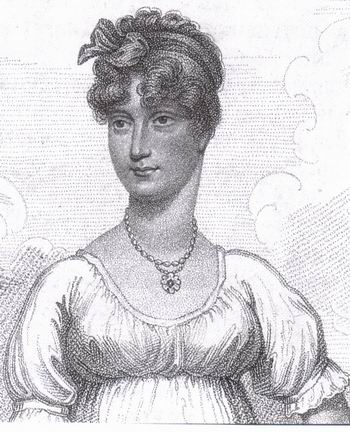
AAN DE DIRECTIE VAN DE KONINKLIJKE NEDERLANDSE ACADEMIE VAN WETENSCHAPPEN, HET KNAW, Te Amsterdam. CC het OM, MINOV Inzake: DE INTERNATIONALE CAMPAGNE TEGEN MASSALE WETENSCHAPPELIJKE FRAUDE, INSTITUTIONELE GESCHIEDVERVALSING EN MISLEIDING VAN HET PUBLIEK MET VERVALSTE, OVER GESCHILDERDE OUDE MEESTER PORTRETTEN
Den Haag, 14 maart 2013.
Geachte Heren, Doctorandussen Hans Chang, en Theo Mulder
Hierbij informeer ik u over mijn ontdekking van een massale wetenschappelijke fraude en institutioneel wetenschappelijk wangedrag dmv het vermeende wetenschappelijke beheer, de zogenaamde wetenschappelijke beschrijving en de misleiding van het publiek door tentoonstelling van oude meester portretten in alle musea. Onze restaurateurs, onze museum directies en onze raden van bestuur zijn daarmee criminele organisaties op kosten van de belastingbetalers. Alle oude meester portretten en sommige genre stukken werden in de periode 1848 –1960 gewit. Dit volgde meteen na de emancipatie van de derde stand die algemeen kiesrecht in Frankrijk kreeg, en onze belangrijke grondwetswijziging die de adel een aantal privileges ontnam. Om terugval te voorkomen besloten de revolutionaire regeringen om alle portretten van het Ancien Regime met beige en roze verf te laten overschilderen. Men beweerde dat de verf donker was geworden, terwijl de schilder witte mensen wilde afbeelden, dus werden alle oude meester portretten zogenaamd gerestaureerd of gewit. Rembrandt werd doelbewust, tegen alle bewijzen in uitgeroepen tot de revolutionaire schilder van de derde stand, terwijl zijn figuren rond 1880; als witten werden her-geschilderd, zoals blijkt uit een foto van de oorspronkelijke Staalmeesters. Tevens kan zulks afgeleid worden van foto’s uit 1934 van de on-geretoucheerde portretten van de Van Aerssen-Beyeren collectie, van de rijkste familie uit de Republiek. Dit betreft het ware gelaat van de adellijke, bourgeois of regenten Meesters (1100-1848) die de huid van hun lijfeigenen en horigen als schoenleer gebruikte. Het goede nieuws is dat dit nog steeds hogelijk zichtbaar is met het blote oog aan de gezichten en handen. Waarbij gezichtshaar over de valse beige gezicht laag werd her-geschilderd, het kapsel lichter werd gemaakt door blonde hoogsels, de huid werd her-geschilderd rond de parelsnoeren, en dat de valse gezicht laag hoger ligt dan de rest. De handen ogen vaak als klauwen, terwijl de klassieke Afrikaanse en het kroeze haar gehandhaafd bleven. Dit is nog erger dan het Professor Diederik Stapel schandaal, het Rijwielsport dopingschandaal, het Gekke koeien schandaal en het Paardenvlees schandaal bij elkaar en zeer schadelijk voor het aanzien van Nederland, en van de meerderheid van de bruine en zwarte wereld bevolking. Gaarne zie ik uw reactie binnen twee weken tegemoet.
Hoogachtend, Uw gehoorzame dienaar,
Egmond Codfried, Conservator Suriname Blue Blood Is Black Blood Museum, Eemstraat 36/ 2515 VS Den Haag. OPEN BRIEF
http://minglecity.com/profiles/blogs/international-campaign-against-false-whitened-over-paints-of-all
Bronnen: Kloek, Wouter Theodoor , Rijksmuseum Bulletin 2006. J. Hernandez, Van Aerssen-Beyeren, Boletin de Artes 1934. D. McRitchie, Ancient and Modern Britons, 1884. A. McQueen, The Rise of the 19th Century Cult of Rembrandt, 2003.
https://blogger.googleusercontent.com/img/b/R29vZ2xl/AVvXsEj_oUAallrIka_updcxSBuVZVOGuBjwkHUk-BA-_cimYm8GPabi81x8W0u118NA73e2eGUDI78s04WShZiS_twClw3T3dTpSqKL55cd769w1AkvIBkwuHhanpkQLG-PrpGjg4l_M2ux8QsY/s1600/J.+van+Beyeren.jpg
http://img1.liveinternet.ru/images/attach/c/2//69/7/69007175_1294591849_4DPict.jpg
http://upload.wikimedia.org/wikipedia/commons/c/c2/Prinsesse_Dorothea_(1504-1547).jpg
De Staalmeesters (1662) on-geretoucheerd. Staalmeesters, Gewit. J van Beyeren en W. van Beyeren door v. Mierevelt. W. van Beyeren gewit. Petronella Borre ega van Francois van Aerssen. Willem I van Oranje (1533-1584) ‘meer bruin dan wit, bruyn van verve ende baerbe’(Berest ’33). Maurits van Saxen, Willems schoonvader. Prins Maurits, zoon van Willem I. Dorothea van Denemarken, nicht van Keizer Charles V Habsburg.
TO THE EXECUTIVE BOARD OF THE DUTCH ROYAL ACADEMY OF SCIENCES IN Amsterdam. CC the DA, MIN OF EDUC. On: THE INTERNATIONAL CAMPAIGN AGAINST MASS SCIENTIFIC FRAUD, MISREPRESENTATION AND INSTITUTIONAL MISCONDUCT BY FALSEFIED, OVER PAINTED OLD MASTER PORTRAITS PRESENTED TO THE UNWARY PUBLIC
The Hague, 14 March 2013.
Dear Sirs, Hans Chang, and Theo Mulder
This is to inform you about my discovery of a massive scientific fraud and institutional scientific misconduct through the alleged scientific management, the so-called scientific description and by misleading the public by exhibition of falsified old master portraits in all museums. Our restorers, our museum directors and our Directors are therefore criminal organizations at the expense of the taxpayers. All old master portraits and some genre scenes were in the period 1848 -1960 whitened. This followed immediately after the emancipation of the Third Estate in France resulting in universal male suffrage, and our own major constitutional change that took away some privileges of the nobility. To avoid relapse the revolutionary governments decided that all portraits of the Ancien Régime must be painted over with beige and pink paint. They claimed that the paint had darkened, while the painter wanted to depict white people. So all the old master portraits were supposedly restored or whitened. Rembrandt was deliberately, against all evidence proclaimed to be the revolutionary painter of the third estate, while his figures around 1880, were re-painted, as whites. This is evidenced by a photograph of the original Syndics. This can also be derived from photos from 1934 of un-retouched portraits of Van Aerssen-Beyeren collection, the richest family in the Republic. This concerns the true brown and black complexions of the noble, bourgeois or regent Masters (1100-1848) who were using the skin of their serfs as shoe leather. The good news is that this is still highly visible by the naked eye on the faces and hands. The facial hair was re-painted on the false beige face layer, the hair lightened by blonde highlights, the skin layer was re-painted around the pearl necklaces, and that the false face layer is higher than the rest. The hands often look like claws, while the classical African and frizzled hair were maintained. This is even worse than the Professor Diederik Stapel scandal, the Bicycle Sport Doping scandal, the Mad Cow Disease scandal and the present Horse Meat scandal put together and is very damaging to the reputation of the Netherlands, and the majority of the brown and black complexioned world population. Kindly sent your response within two weeks.
Sincerely, Your obedient servant,
Egmond Codfried, Curator Suriname Blue Blood Blood Is Black Museum, Eemstraat 36/2515 VS The Hague. OPEN LETTER
Sincerely, Your obedient servant,
Egmond Codfried, Curator Suriname Blue Blood Blood Is Black Museum, Eemstraat 36/2515 VS The Hague. OPEN LETTER
Adresses
info@wereldmuseum.nl
communicatie@wereldmuseum.nl
educatie@wereldmuseum.nl
reserveringen@wereldmuseum.nl
publiek@mauritshuis.nl
educatie@mauritshuis.nl
pressoffice@mauritshuis.nl
shop@mauritshuis.nl
Stichting.Vrienden@mauritshuis.nl
vacature@mauritshuis.nl
publiek@mauritshuis.nl
info@wbs.nl
educatie-erfgoed@delft.nl
erfgoeddelft@delft.nl
IMAGERY, PORTRAIT RETOUCH AND THE NOBILITY OF EUROPE (1100-1848)
This essay attempts to show how imagery reflects political changes, and that brown and black complexioned Europeans were at the centre of European history. They were the first Europeans from Africa, and saw this as a right to rule and oppress the white serfs that came much later from Central Asia. The history of the old nobility is about Blacks while the history of the Great Peoples migrations is that of the whites.
Any revisionist research about the nobility offers vague explanation of its beginning, with the usual infantile explanation for the origins of the phrase blue blood. Revisionist sources written by the people who monopolise power and money is like reading a biography of Barack Obama which fails to mention he was a Black man, who self-identified as Black; with a Black wife. The oldest, scientific noble genealogies go back to 1100-1200, and there is no link to older nobilities. The modern nobility styled themselves after the ancient Greek nobility which saw itself as from the soil of Greece compared to the barbarians who came from elsewhere. They had the right of seniority to rule. Blacks in Antiquity by Frank Snowden shows many Blacks and images of Blacks in Greece and the Roman world yet he does not fully identify them as Europeans, not gives a clear view of where they derived from. What he offers mostly are images of Classical Africans, and this is linked to modern race thinking, a unscientific concept with a too narrow and strict view of who or what is black. Jane Austen’s novels offers a different taxonomy: she divides her subjects in light brown or sallow, brown, very brown and black persons. The ones with classical African facial traits, that come as we know in all shades, have ‘distinguished’ looks and are ‘pure of blood.’ They resemble the Moor, the classical symbol for the blue blooded nobility and Black Superiority.
The blue blood nobility, the true or old nobility was called blue blood because they were descendents from the blue men, as how brown and black complexioned Europeans were known. Part of these native Europeans, who had come from Africa, 45.000 years earlier elevated themselves into a nobility, to rule over the bourgeoisie who was equally brown and black of colour, and the serfs who were the Asian derived whites. The whites started coming to Europe about 6000 years ago, but the greatest mass seems to have arrived only around 400 AD. Ancient and Modern Britons by D.McRitchie discusses the different brown and black complexioned European nations, as how they were perceived by their contemporaries, and how they survived in tales, myths and topographic and family names. It seems these black nations merged in a nobility and a bourgeois casts, which ruled over the white serfs. JA. Rogers in Sex and Race traces the classical African types among the nobility and royalty, since James I Stuart, showing Blacks sitting on the thrones of Europe.
Brown and black complexioned were always seen in leadership positions but after 1100 the noble faction set up fortified towers, donjons amid rural societies like conquerors and extracted taxes and labour from the populace in exchange for protection. In the cities the equally brown and black complexioned bourgeoisie became a regent or gentry cast and made their fortunes with trade and manufacture. The nobility and bourgeoisie intermarried to maintain colour. They had military power and classical scientific knowledge from the Middle East. Protestantism seems to be influenced by Eastern Christianity, with its strict rules about depicting god, brought back by Crusaders after their Eastern Kingdoms collapsed. They might have brought their easternized off spring and allies with them. The bourgeoisie ruled the cities while the nobility ruled the countryside. There was intermarriage between these castes as nobles craved the money from trade and the bourgeoisie craved the aristocratic titles. But the nobility looked down on both the bourgeoisie and the serfs.
This can be understood when Emma Woodhouse tries to marry the black Mr. Elton to the white Miss Harriet Brown. With Emma (1816) Jane Austen (1775-1817) wrote an allegory, and her vision of a post revolutionary Britain. She favoured Black Superiority and numbered the giving of education to whites, giving whites notions of equality, and giving whites positions of authority, and diluting their pure blood with whites as the reasons for the downfall of Blacks, and their total annihilation. By tradition the bourgeoisie was against noble domination. It was as if the second estate consisted of two black European tribes fighting for domination. The aristocrats and royals presented themselves as divine beings, and claimed that god had willed their position. The Virgin Mary and Jesus were hence depicted as Black. Hand in hand with the founding of the nobility the image of the Black King Balthasar was introduced as well as St. Maurice, and the Black Madonna’s. Paul Kaplan collects images of the Balthasar in The Rise of the magi, but fails to link this imagery with the emerging Black Christian Kingship. All imaginary divine and religious personages were classical Africans in looks and thus resembled the heraldic Moor, which was used to symbolise nobility and Black Superiority.
The struggle to end the noble domination, is the stuff of the Enlightenment, as the nobility had become an obstacle for progress. The bourgeoisie forged an alliance with the whites that were the serfs. Their skins were used to make book covers, clothing and shoes; which is an indication of their status and rights. And shows why there was a need for a Declaration of Human Rights. The brown and black Europeans totalled only 2-3% of the population, as Austen writes about ‘two and three families in a country town as just the thing to work with.’ In order to overthrow the nobility first the unscientific concept of Human Races was invented. Next whites were elevated into human hood, and given a superior position over Blacks who were positioned just above the Apes. Apes were presented as humans who were degenerated because of their evil morality. This newly invented Racism against was thus a rational liberation ideology to wean away whites from their devotion to the nobility who self-identified as Black with heraldic Moors. This Black Superiority was supported by the church and for some time church doors were lined with human skin. Life flaying was a common form of execution. At the eve of the French Revolution the French King was presented with slippers made of human skin. Human leather and flaying are found in google, and discussed in digitalized books. The first estate was the church, which was also dominated by the nobility. The Enlightenment managed to bring about the French Revolution (1789-1794), with the nobility and kingship abolished, and the Declaration of Human Rights instated. But the bourgeoisie betrayed the whites. But the third estate, the whites finally managed in 1848, after the restorations like those by Napoleon, with the Final Revolutions to liberate themselves.
Mindful of the betrayal by the Bourgeoisie they set out to rewrite history and eliminated all reference to blackness and Black superiority. Always a highly controversial concept that was only discussed in hushed language. Religious imagery of Black Madonna’s were destroyed. They had all personal and genre portraits altered from brown and black to a white complexion. There is a sense of reversal when the emerging nobility created black religious imagery, and next victorious whites whitening black portraits and images. Alison McQueen wrote about the cult of Rembrandt, which was conscious choice to create a whitened history through whitened images. Unfortunately there is not a word about the retouch of portraits in her revisionist study. But the new professional restorers were instructed to ‘restore’ portraits and images back to what the painters were supposed to have intended, namely showing whites. Instead of being vandalised, the choice was made to alter the offending images. This practice went on till 1960. The pretence was that the paint had only darkened and the varnish yellowed. Of course darkening of paint or dirt does not explain away the classical African looks and frizzled hair, which are quite common among Rembrandts figures. Rembrandt was chosen as a master painter who depicted and favoured the third estate and was thus given a fake biography, to become the revolutionary, republican ideal. As the nobility from 1100 on used imagery with Blacks to establish its rule and its superiority, so whites also began their domination in 1848 with the whitening of the portraits of their former brown and black complexioned oppressors. However, these retouches are still very visible on top of the brown faces and hands and are maintained by present day restorers. White supremacy is based on fake, whitened images of the brown and black elite; the Ancien Regime.
Early photographs of Old master paintings like those by Adolphe Braun before 1880 show the brown faces, as can be seen on a photograph of The Syndics of the Clothmakers Guild, or De Staalmeesters, by Rembrandt. As well as photographs of the Van Aerssen-Beyeren Collection that were photographed by Nandini as late as 1934. These are the un-retouched portraits by Van Mierevelt, Van Ravesteyn, and De Vries, showing a variety of brown skin colours among the richest 17th century, Dutch family. This collection is today also retouched, and the sitters appear white, some still with their frizzled hair that is now blond. In Isabelle de Charrière by Courtney (1993) a member of the Van Aerssen family, Anna Margaretha van Aerssen, was described as: ‘Mrs. Maasdam black as chimney,’ by her cousin James Boswell. His grandmother was Veronica van Aerssen, and he self-describes as ‘black.’ His biography says he was ‘swarthy, with black eyes and dark hair.’ Baron Aarnoud Joost van der Duyn van Maasdam of the oldest nobility was Van Aerssens husband and described by Boswell as ‘her husband chimney sweeper.’ De Charrière wrote a poem about his brown black complexion. These descriptions can be applied to some of the portraits in this collection as well, and cannot be attributed to darkened paint Petronella Borre by Van Mierevelt, the wife of Francois van Aersen (..) shows the strongest classical African facial traits.
Restorers today like Epco Runia (2008) who study and describe these altered works know about this practice; they often mention that 19th century restorers practiced their craft differently, but without going into specifics. As the instruction to restorers is not to point out these types of ‘iconographic interventions.’ But to maintain these type of retouches as much as possible. Their restoration reports usually only mention retouches in the background and clothing, as if only the faces and hands seem to have escaped degradation. This is scientific misbehaviour, and constitutes scientific fraud as the data is falsified and altered to conform to a preconceived conclusion. There is often a discontinuation in craquelé on face and hands, or they both show the same but a different type of craquelé. The brown face underneath remains visible, and the skin treatment is often crude. Beige over paint is often spilled on the hair framing the face, as if done in haste. Facial hair and ponies are over painted and next retouched back on top of the over paint layer. Viewed from an angle, the faces show a elevated paint layer. Beige skin paint is worked around colliers and pearls, while we should have expected them to be painted on top of the skin paint layer. Hair and beard is lightened by way of highlights. The Mauritshuis catalogue mentions brown-like under paintings that are a detailed face but says not to know what this means. X-ray can be informative, as they may show the thickest paint layers, which can be the retouched faces and hands. But the research question should first be about facial retouches to be able to identify them, and this is where these revisionist investigations fail. According to …before and after photo’s are doctored to conceal the extends of retouches made. And according to Knut…restorers often act differently from what they claim principle wise, but he does not go into details.
The question remains if these alterations were made to be reversible; on top of an isolating varnish layer and with water soluble paints or dry pigments, or if they were irreversibly made on top of the original paint layer with oil paints. There are some pieces that show solid pink faces on top of masterly painted harnesses, as if the family itself took to over painting and whitening of their ancestral portraits. As if they were under some pressure or deadline to alter the portraits. They might otherwise have been perceived as anti-revolutionary. But the cult of Racism might have convinced later generations that Black was inferior, so they voluntarily decided to alter their ancestor’s portraits. The gist of Austens letters point to fear to be identified as the writer of those books, with Austen not publicising her image, and her family failing to submit her true image. There remain un-retouched portraits in private collections, and some are to be seen on the web, or are to be found at the IB/RKD. There is secrecy about the Van der Duyn van Maasdam Collection. The House van Zuylen catalogue, Op stand aan de wand, shows double anonymous half-whitened portraits that seem to depict the Van Goor family, who look classical African like Maria Jacoba van Goor (1687-1737). But the un-retouched portraits are not displayed on their online database, as there still seems to be a need or a motivation to hide blackness by the present day white Dutch. They do not seem to know the whole story, but prefer to keep the black portraits out of sight. Some even deny noticing any blackness, but still will go on hiding these images. Like the un-retouched very black portrait of Maria de Lange that is not on the web database next to her husband Van Sypesteyn, while the IB keeps a photo on file, next to her husbands.
We need to ask ourselves if this practice of falsifying history that started 160 years ago for revolutionary, political reasons should still be enforced by scientific fraude, to the detriment of present brown and black complexion tax-paying citizens. Who also study history and art, and visit our museums. Should the State of The Netherlands still maintain these faked, over painted portraits in their present incarnation as a type of State Racism and institutional scientific misconduct against the Blacks today?
Egmond Codfried
Suriname Blue Blod Is Black Blood Museum
19 januari 2013.
To Mrs Sabine Craft-Giepmans,
Curator of Portraits Database of the
IB/RKD, The Hague
In Regard To: My research of the ideological inspired over paint/whitening of all Old Master portraits in public collections since 1848.
The Hague, 23 January 2013.
Dear Mrs. Sabine Craft-Giepmans,
We spoke last week as I approached you in search of 19th century photographs of Old Master painted portraits before they were retouched, because the claim was that the paint had darkened and the varnish yellowed, making the persons look dark, while the idea was asserted that the painters intended to make them white. You were not familiar with these photos that supposedly were also collected in albums, so I hope they might still surface at the RKD, and at the other institutes you have suggested. In regard to my questions about old museum exhibition catalogues you referred me to the RKD library, for which I thank you.
So these portraits were all restored to their supposedly original white state. Because of the study by Alison McQueen about The Rise of The Cult Of Rembrandt (2003) in 19th century France, I traced the start of this ideologically inspired practice of retouching all portraits in public collections to the year of 1848. When The Netherlands had it’s important change in the constitution, ending noble privileges, and giving the third estate equality before the law, and political representation. In France the third estate males got universal suffrage. As the political status quo changed, so did views on art and aesthetics. A lot of imagery that symbolised the ruling caste and its principles of noble superiority were destroyed during the French Revolution. What remained were the portraits that showed the true faces of the Ancien Regime, the church hierarchy or first estate, and the nobility and the bourgeoisie who were the second estate.
The newly emancipated third estate consciously settled on Rembrandt and decided to make him a figurehead for the new republican order. They created a fictional biography, and attributed 900 works to him, while today only 300 prevail, and claimed him as a painter of the third estate. As a true republican who lived and created free from Roman Catholic and monarchic tyranny. The final stage was restoring his portraits that originally represented the face of the Ancien Regime to their supposed whiteness, to represent the white third estate, the newly emancipated and empowered white serfs.
In this way all Old Master portraits and many genre pieces were whitened by over paints between 1848 and 1960. At the Mauritshuis Museum this was done by professor A. Hauser and JC.Traas, among others. Restoration reports today like those by Epco Runia (2009) enlist them, but do not specifying what they actually did. Present day restoration reports refer to their questionable practices, which are morally nor aesthetically supported by the professional code today, yet he is not going into detail. But they are clearly referring to the extensive retouches on the faces and hands. Yet restorers are instructed not to point out ‘iconographic interventions,’ not to mention them in their restoration reports and maintain them as much as possible. So the present day restorers maintain, and even restore interventions from 160 years ago that we (they) do not understand nor agree with today. Nor freely discuss as they constitute a falsifying of history to change the complexions of the Ancien Regime from brown and black to white. This constitutes scientific fraud, and institutionalised scientific misconduct as this ‘science’ is based on falsified data and a preconceived conclusion that the ancient European elite was white.
The old photographs from Old Master paintings by Adolphe Braun and Goupils proof this assertion. As well as photos by Nandini made and published in 1934 of the Van Aerssen-Beyeren family Collection. They were exhibited in 1915 at the Gemeente Museum, and now reside at the Del Prado, in retouched, whitened state. A member of this family, the richest in the Republic, was described as ‘Mrs Maasdam black as chimney.’ She was Anna Margaretha van Aerssen (1713- 1803) Baroness Van der Duyn van Maasdam. There is no portrait of hers submitted, but the chief part of the Van der Duyn van Maasdam collection, of one of the oldest nobility, is curiously not photographed nor scientifically described. They are no part of your RKD collection, and I urge you to find out why. An engraving of George Keppel of Albemarle, whose grandmother was a Van der Duyn, shows a very dark skinned person. His uncle Aarnout Joost van der Duyn was described by James Boswell, a cousin of his wife, as ‘Her husband chimney sweeper.’ Isabelle De Charrière (1739-1805) wrote a poem in admiration of his brown black complexion: ‘A son teint noir et basané’(1762) And she claimed in a letter that this family was famous for their swarthiness.(Whatley 2000)(Courtney 1993) The RKD shows a whitened portrait of the Baron by De Spinny. Engravings like those of Keppel were made after a painted portrait. These paintings exist now as over paints, or are kept hidden or were destroyed.
I submit my findings of brown and black complexioned portraits, mostly engravings that show the royal, noble and bourgeois elite were indeed brown and black of complexion, while some like Jochem de Neve, the youngest Syndic and a bourgeois, who shows strong classical African facial traits, next to very dark skin. Those were considered pure of blood, or proof of nobility. This is what all the portraits by Old Masters looked like, as the elite highly valued it’s dark complexions, and even wore the huge white collars to amplify this quality.
:
|
Blue blood is black blood : the iconographical proof of a dominating black and colored European race who were a noble and royal elite (1500-1789) = Blauw bloed is zwart bloed : het iconografisch bewijs van een dominerende zwarte en gekleurde Europese natie die een adellijke en koninklijke elite was (1500-1789) / door Egmond Codfried
|
Kind regards.
Egmond Codfried
Curator Suriname Blue Blood is Black Blood Museum
Eemstraat 36/ 2515 VS The Hague
Bluebloodisblackblood.blogspot.com
(1)The Syndics by Rembrandt (1662). (2)George Keppel (black) and whitened. (3,4) J. and Willem van Beyeren by van Mierevelt.
Aan de Organisatoren, conservatoren en sponsoren van de Huygens expositie in de Grote Kerk
Tav heer B. (Bartout) Gieben.
c.c. Gastconservatoren: De heer Dr. A. (Ad) Leerintveld (Koninklijke Bibliotheek), de heer Prof. dr. V. (Vincent) Icke, mevrouw Drs. J.C. (Charlotte) Lemmens MA, de heer Drs. P.A. (Peter) van der Ploeg (Huygensmuseum Hofwijck).
c.c. Bestuur: Mevrouw S.M. (Sybilla) Dekker – voorzitter, mevrouw H.M.C. (Lenie) Dwarshuis-van de Beek – secretaris, de heer Mr. G.J.C. (Gérard) van Engelen, de heer Mr. R.J. (Rein Jan) Hoekstra, de heer J. (Jan) Schinkelshoek, de heer Dr. W.M. (Menno) Witteveen – penningmeester.
c.c. Adressen, sponsoren:
inzake: wetenschapsfraude door geschiedvervalsing met alle geretoucheerde, overgeschilderde , gewitte oude meester portretten in alle musea.
Den Haag, 20 maart 2013,
[een gewit portret van Maurits Huygens (1595-1642), de broer van Constantijn Huygens, en de oom van Christiaan Huygens door Rembrandt: dit portret (of een kopie) wordt niet getoond in het Huygensmuseum-Voorburg. Christiaan Huygens.]
Geachte heer Bartout Gieben,
Gaarne informeer ik u dat ik een massale wetenschappelijke fraude en geschiedvervalsing heb ontdekt welke wordt voltrokken door de tentoonstelling van gewitte overgeschilderde portretten van alle oude meesters.
Indien u na deze melding toch kritiekloos en zonder waarschuwing aan het onkundige publiek deze vervalste portretten exposeert, maakt u zich schuldig aan wetenschappelijke fraude en bedrog.
Het portret van Maurits Huygens was tijdens mijn onderzoek niet aanwezig in het Huygensmuseum. Bij navraag werd tegen mij gezegd dat men ‘niets wist van Maurits Huygens, dus hem niet zal tentoonstellen.’ Rond die tijd (2005-2006) waren er al vijf boeken over hem verschenen.
Mijn conclusie was dat Maurits Huygens oogt als een licht gekleurde mulat, en dat iedereen dat zelf kan vaststellen, dus werd in het kader van de geschiedvervalsing van na 1848, toen de derde stand die de witte Europeanen waren, geëmancipeerd werden; (werd) zijn portret door Rembrandt nota bene niet getoond.
Het betreft een gewit portret, men heeft naderhand (1848-1960) de beige en roze verflagen opgebracht, maar het bruine gelaat is nog zichtbaar. Hetzelfde gebeurde met het Van Mierevelt portret van zijn broer Constantijn, en het erge verval is wellicht te wijten aan het gebruik van inferieur materiaal en verkeerde technieken bij de zogenaamde retouch operatie. Deze familie oogde zeer zwart van huid en had klassieke Afrikaanse gelaatstrekken. De Ancien Regime elite was bruin en zwart van huid, en werd als zodanig beschreven en ook zo afgebeeld.
Voor de technische details verwijs ik graag naar de rest van deze email.
Hoogachtend.
Egmond Codfried
http://minglecity.com/profiles/blogs/international-campaign-against-false-whitened-over-paints-of-all
Curator Suriname Blue Blood Is Black Blood Museum
Eemstraat 36
2515VS Den Haag
Aan de Directie van de Kb, te Den Haag
Inzake: een recente bestelling van een kopie van een artikel in een buitenlandse bibliotheek, met door de zender vervalste afbeeldingen
Den Haag, 2 maart 2013.
Geachte heer/mevrouw,
Recentelijk betaalde ik de KB euro 9 voor een kopie van een tijdschrift artikel, maar ontving niet waar ik op hoopte. Ik ben in feite afgescheept met een vervalst vod.
Men heeft in Duitsland het artikel met veel illustraties, gescand en daarbij het contrast op maximum geplaatst waardoor de zwart/wit verhouding geen juiste weergave is van de foto’s van dit artikel, maar eerder wat men wil dat ze zouden moeten zijn.
Ik stuur u een voorbeeld van hoe de afbeeldingen op de kopie eruit moeten zien, met deze brief, en verzoek u of het mogelijk is om de bibliotheek in Duitsland opnieuw te benaderen en hen te zeggen dat ze een gewone, neutrale scan moeten maken.
Wat zij hebben gedaan is, in het kader van mijn onderzoek, een soort vervalsing te sturen en censuur te plegen.
Hoogachtend.
ESR Codfried/ Eemstraat 36/ 2515 VS Den Haag
Artikel: J.Hernandez Diaz, 'Notas de los retratos de la Coleccion del Baron van Aerssen Beijeren', Boletin de Bellas Artes de Sevilla 1 (1934), p. 10, nr. 17, afb. op pl. 8; E. Valdivieso, Pintura Holandesa del siglo XVII en Espana, Valladoid 1973, p. 363;
THE THIRD ESTATE (1100-1848 ) WERE THE WHITES
In this thread, I will present three main reasons why I think the third estate were the whites. They were ruled and oppressed by the first and second estates, who were respectively the church, and next the Nobility and the Bourgeoisie. The first and second tier did not pay taxes. The French Revolution (1789-1794) brought the Bourgeoisie to power, after they stole the revolution from their partner, the third estate. Restorations like the one by Napoleon brought the nobility back into power. The third estate was mostly the serfs, and they were only emancipated in 1848 during the final revolutions when all men got suffrage.
1
The general accepted version of history could be read in encyclopaedias and in wikipedia, and soon one discovers that the beginning of the nobility is always kept in doubt. Yet in science we need to establish facts, to built a theory on. In general, it is accepted that the first humans appeared in Africa and the first Europeans came from Africa when the ice melted 45.000 years ago. Africans have many complexions and facial types. Next we learn in general that these Africans became whites about 6000 years ago. Also that ‘our’ ancestors came from the Middle East 6000 years ago. We know about the so-called Ice-Mummies, found in Central Asia, who show blond types with white facial traits. We know about the Great Peoples movements around 400 AD, which brought great numbers of these white Asians into Europe.
Can Blacks become white? Rather Europe became white because whites from Asia poured in, where they met the native brown and black complexioned Europeans that David McRitchie writes about in ‘Ancient and Modern Britons’ (1884). He also assumes that the gypsies are remnants of these brown and black nations he calls Picts, Danes, Moors, and Tinklers. Gypsies show great disdain for the farmers and other settled folks, like nobles would. He says that gypsies are descendents of ancient noble and royal families who lost their castles, positions and rights, but act as if they still have these prerogatives. They still hunt and still collect goods from their former subjects, but which is now regarded as poaching and stealing. In looks they resembled native Australians and among those we find blond persons. These types we also see among modern dark skinned gypsies with blond hair. So, a historical person described as blond could still be very dark or black of complexion.
2
Jane Austen (1775-1817) wrote six (finished) historising novels and was described as a ‘brunette of complexion,’ and ‘brown, not a pink colour.’ That according to her John Donne quoting brother Henry Austen: ‘her eloquent blood shone in her modest cheeks.’ This can be understood as her having classical African facial traits, and being dark brown. Her father had frizzled hair, with ‘curls close to the head.’ And her mother’s complexion was ‘without any brightness,’ so she was very dark indeed. Austen’s mother descended from nobility. Fanny Price of ‘Mansfield Park,’ was based on the life of Elisabeth Dido Langsay, a beloved niece of Lord Mansfield, who was born from a slave woman. Austen wrote about the gentry and the nobility, and all her personages were ‘sallow or light brown, brown, very brown or black.’ But to her ‘the lower orders’ were the whites, also called Pinks.
They were the ‘two and three families in a country town as just the thing to work with’ Austen writes, and can be understood as 2-3% of the population. Mr. Elton in Emma (1816) is ‘black, spruce and smiling.’ In Mansfield Park her very rich Mr. Henry Crawford is ‘absolutely plain, black and plain; but still the gentleman.’ They were the heraldic Moor, like Othello, or any Moor at the centre of a noble portrait or genre piece, conveying blue blood, or Black superiority. Her cousins husband, Comte de Feuillide, was beheaded during the French Revolution, which must have devastated the Austen family, and this was her motive for writing against the fact that the Ancien Regime lost power. Her cousin Comtess Eliza de Feuillide described herself as ‘the native brown of my complexioned heightened with a Tan.’ She discusses the skin bleaching and whitening practices of the nobility, discussed as ‘face enamelling’ in internet. Austen’s father, Reverend George Austen, was nevertheless a trustee of an Antigua plantation owned by Mr. Nibbs, who was also Austen’s godfather.
Austen states in so many words that it is ‘natural’ to have whites as servants, that it was a great folly of Blacks to give whites notions of equality, and educate them or give them positions over Blacks. Finally, she wrote against Blacks diluting their pure blood with whites. From Jonathan Swift, and web-articles and books about flaying, books bound in human skin, clothing from human leather, and Louis XVI being offered slippers made from human skin, we understand that whites, the third estate were hardly seen as people. They were the outcasts from society. This is the evil the historical ‘Declaration of Human Rights’ seeks to address. All this was preceded by the invention of human races (1760), to raise whites to human level, and to invent racism against Blacks as a liberation ideology. The nobility, different then the equally brown and black complexioned bourgeoisie who had politically sided with the majority whites: self-identified as Black, with heraldic Moors and Black Madonna’s. Blue blood, the highest nobility, was Black blood and they were descendents of Blue Men, the brown and Black Europeans (500-1500). There were even brown and blacks among the Vikings who invaded all of Europe.
3
After the third estate won their freedom in 1848 they settled on Rembrandt to make him their figurehead to built a new, revolutionary aesthetic on. We learn from Alison McQueens study, ‘The Rise of The Cult Of Rembrandt, in 19th century France’ (2003) that the revolutionaries consciously invented a fake biography. And 900 works were attributed to Rembrandt, while today only 300 prevail. He was now declared to be a painter of the third estate. However, McQueen fails to understand that the high point of this history falsifying cult was mostly about amending all his figures as the paint was supposed to have darkened. To prevent any return to power of the first and second estate all old master portraits that showed a brown or black complexion, were ‘restored’ to whiteness, to reflect the supposed ‘intentions’ of the painters.
This can be seen on the fifteen offered old photos as sources, of portraits by Rembrandt, Van Mierevelt, Van Ravesteyn, and De Vries before the retouch era (1848 –1960). Most of these portraits belong to the Van Aerssen-Beyeren Collection, the richest family in The Netherlands, and Anna Margaretha van Aerssen was described as ‘black as chimney’ by her cousin James Boswell. A Scottish noble who in his journal self-described as ‘black.’ Boswell also tells us that King Charles II Stuart, who was known as ‘The Black Boy,’ was ‘The Swarthy Stuart.’ His teacher, the French philosopher J.J. Rouseau, was “A genteel black man in an Armenian coat.’ In his biography Boswell is ‘swarthy, with dark hair and black eyes. Yet the portrait offered shows a white man, with fair hair and very pink cheeks.
We are thus shown falsely, whitened portraits, and on inspection, the brown skins underneath face and hands are still visible. The restorers today, who are trained not to point this out, know about this. In their so-called scientific restoration reports, they often complain about the practices of 19th century restorers but never go into detail. Here we have a clear case of major scientific fraud and institutional scientific misconduct. This is to the detriment of brown and black complexioned persons, but mainly against the Blacks.
Egmond Codfried
Curator Suriname Blue Blood Is Black Blood Museum
The Hague
12 February 2013.
To the Directors of RKD/IB, Mr. Chris W.M. Stolwijk, director
Drs. Bert Warmelink, commercial deputy director
Drs. Bert Warmelink, commercial deputy director
In case: Verbal refusal of request for a copy of a copy of a Spanish magazine article in the Van Aerssen –Beyeren Dossier
The Hague, 27 February 2013.
Dear Sirs,
I was today at the RKD and requested a photocopy of a photocopy of an article in a Spanish art magazine of 1934, about the Van Aerssen-Beyeren Collection, which was exhibited in 1915 in the Gemeente Museum in The Hague.
I’m doing research after the Van Aerssen family. They owned part of Suriname where I originate and Cornelis van Aerssen van Sommelsdijck (1657-1688) was a Governor of Suriname.
Be so kind to enlarge on this refusal and explain how the privacy of these long dead people can be violated, if I get to study the collection pictures.
This looks also like censure, while in Holland we favor openness and freedom of scientific research.
I have already seen the copy version of the article at the RKD in 2005, but now I understand better what I saw then and want to include this in the study I’m writing at present.
Hope to hear from the RKD soon.
Kind regards,
Egmond Codfried
Eemstraat 36
2515 VS Den Haag
Source:
J. Hernandez Diaz, 'Notas para la formacion del catalogo de los retratos existentes en la coleccion del baron van Aerssen-Beyeren', Boletin de Bellas Artes de Sevilla 1 (1934),
http://www.afrigeneas.com/webbbs/media/history/0/315_1.jpg
The Syndics of The Clothesmakers Guild (1662) (De Staalmeesters) by Rembrandt.
The above image is a photo by A. Braun, made before 1880, before the painting was ‘restored.’ The restoration was a retouch of the faces, to whiten them. It was claimed that the paint had darkened, while it was Rembrandts intention to show different shades of brown faces, as the elite was described as brown and black of complexion.
(Source of photo: Bulletin van het Rijksmuseum 2006, p. 208)
To RKD/The Hague
Subject: Massive scientific fraud and institutional scientific misconduct with false, whitened, repainted portraits of all Old Masters in all museums
The Hague, 22 February 2013.
Dear Drs. Michiel Franken, RKD curator of Rembrandt portraits,
By chance I saw your article about ‘The Syndics of The Clothesmakers Guild’ (1662) in the latest RKD magazine. That is why I sent you a print of a photo of the Syndics taken before 1880. It still shows the Syndics as they looked before restoration. Your article does not mention that the Syndics were fraudulently whitened and we are being deceived with a false over painting of originally brown and black complexioned persons.
The famously unscrupulous 19th century restorations were made because it was said that the paint had darkened and the varnish had yellowed. Yet anyone today can see that the painter intended to paint brown and black faces of the members of the bourgeoisie elite. With Jochem de Neve, the youngest Syndic, the second from left, we have the darkest member, and with the strongest classical African facial traits. These facial traits often go together with a brown and black skin. The brown skin is still visible if one views a painting, and the persons who maintain these paintings have to know about this falsehood perpetrated on the unwary public.
So we cannot go on today and maintain the false notion that the paintings were restored because the paint had darkened, or dirtied, but that the painters intended to paint white people. After 1848 when the third estate, who were the white Europeans; were finally liberated they set out to whiten all old master portraits and genre pieces. This was done to ensure that the nobility and bourgeois could not make any historical claims on power or rights.
The study by Alison McQueen about ‘The rise of the cult of Rembrandt in 19th century France’ (2003) shows how history was intentionally, for revolutionary purposes; was falsified, and how they intentionally chose Rembrandt, and provided him with a false biography, to make him a figure head for the revolutionary state. The state needed a new aesthetics, and Rembrandt was made to be the exemplary painter of the third estate. Which he was not, as he painted the brown and black complexioned elite, which he himself also belonged to.
My conclusion is that history was falsified from 1848-1960, and scientists like you are today maintaining this terrible 160 year old fraud. The proof that the noble and bourgeois elite(2-3% of the Europeans) was brown and black of complexion hangs in all museums, and the brown skins are still visible under the often ugly beige defacing over paint. Facial hair is repainted on top of the fake layers, while the hair on the head is lightened with fake highlights.
Kindly inform me what you have found after you did your own investigation of the fraudulent images. Because of these faked images we have white superiority and racism against Blacks.
Egmond Codfried/ Suriname Blue Blood Is Black Blood Museum/ Eemstraat 36/2515 VS Den Haag
http://www.nieuwsdossier.nl/wp-content/uploads/2007/11/alfonso_xiii_van_spanje_overleden.jpg
The Blue Blood Is Black blood Theory (1100-1848) states that Europe was ruled by a brown and black complexioned royal, noble, bourgeois en intellectual elite, but their portraits were falsified, whitened or restored: The Syndics of the Clothesmakers Guilt or De Staalmeesters (1662) by Rembrandt, before and after retouch. Photo by A. Braun before 1880. Willem van Beyeren by Van Mierevelt. Jaques van Aerssen by De Vries. Voltaire black and white
The Blue Blood Is Black blood Theory (1100-1848) states that Europe was ruled by a brown and black complexioned royal, noble, bourgeois en intellectual elite, but their portraits were falsified, whitened or restored: King Charles II Stuart, called The Black Boy. Mary of Scots. J.J.Rousseau: ‘a genteel black man.’ Queen Anne of Denmark, wife of King James I Stuart.
The Blue Blood Is Black blood Theory (1100-1848) states that Europe was ruled by a brown and black complexioned royal, noble, bourgeois en intellectual elite, but their portraits were falsified, whitened or restored: Queen Caroline, wife of George IV of Hannover. Catherine de Medici, Queen of France. Anna Boleyn, mother of Elisabeth I: ‘very dark, with black eyes and dark hair. Poet Jan Vos: ‘ugly.’
The Blue Blood Is Black blood Theory (1100-1848) states that Europe was ruled by a brown and black complexioned royal, noble, bourgeois en intellectual elite, but their portraits were falsified, whitened or restored: Johan de Witt. Bernadotte, King of Sweden. George Keppel of Albemarle. King-Stadhouder William III.
The Blue Blood Is Black blood Theory (1100-1848) states that Europe was ruled by a brown and black complexioned royal, noble, bourgeois en intellectual elite, but their portraits were falsified, whitened or restored: Goethe. Jourdan. Francois de la Noue. Madame Germain de Stael-Holstein: ‘too swarthy,’ or ‘bad complexion, good features.’
The Blue Blood Is Black blood Theory (1100-1848) states that Europe was ruled by a brown and black complexioned royal, noble, bourgeois en intellectual elite, but their portraits were falsified, whitened or restored: PRINCESS Anne of Hannover, wife of Stadhouder Willem IV. Prince Maurits of Orange. Princess Marianne of Orange –Nassau. Count Johan VI of Nassau, brother of Willem I of Orange.